



Key Takeaways
- Assisted living communities may have trained caregivers and licensed nurses available on-site or on-call, depending on the community.
- Care teams provide daily support with medication, hygiene, and mobility.
- Personalized care plans can be adjusted as your loved one’s needs change over time.
- Memory care and respite care offer different levels of specialized staffing.
What to Know About Nurses in Assisted Living
When you’re looking into assisted living for a loved one, one of the first questions that comes up is whether a nurse will actually be there when they need one. It’s a fair concern, and it matters deeply, especially when your loved one’s health and comfort are on the line.
Nursing support varies by community, so it’s important to ask when licensed nurses are available and what services they provide. Knowing exactly what that support looks like, as outlined by what assisted living includes, can help your family understand what to expect.
Types of Care Staff in Assisted Living Communities
Assisted living communities are staffed with a mix of trained caregivers and licensed nurses who work together. Caregivers handle the hands-on, day-to-day support that makes a real difference in your loved one’s comfort and routine. Licensed nurses may help monitor health changes, manage medications, and respond to medical needs as they arise.
What makes this model work well is that the care team is built around your loved one, not the other way around. Care teams communicate about residents’ needs to support consistent care. It’s a coordinated approach that helps your loved one feel seen, supported, and cared for throughout their daily routine.
What Nurses & Caregivers Do in Assisted Living
Day-to-Day Support for Your Loved One
On any given day, caregivers and nurses are doing a lot more than just checking in. They help with medication management, personal hygiene, and getting around safely. Staff may help with other daily tasks based on each resident’s needs.
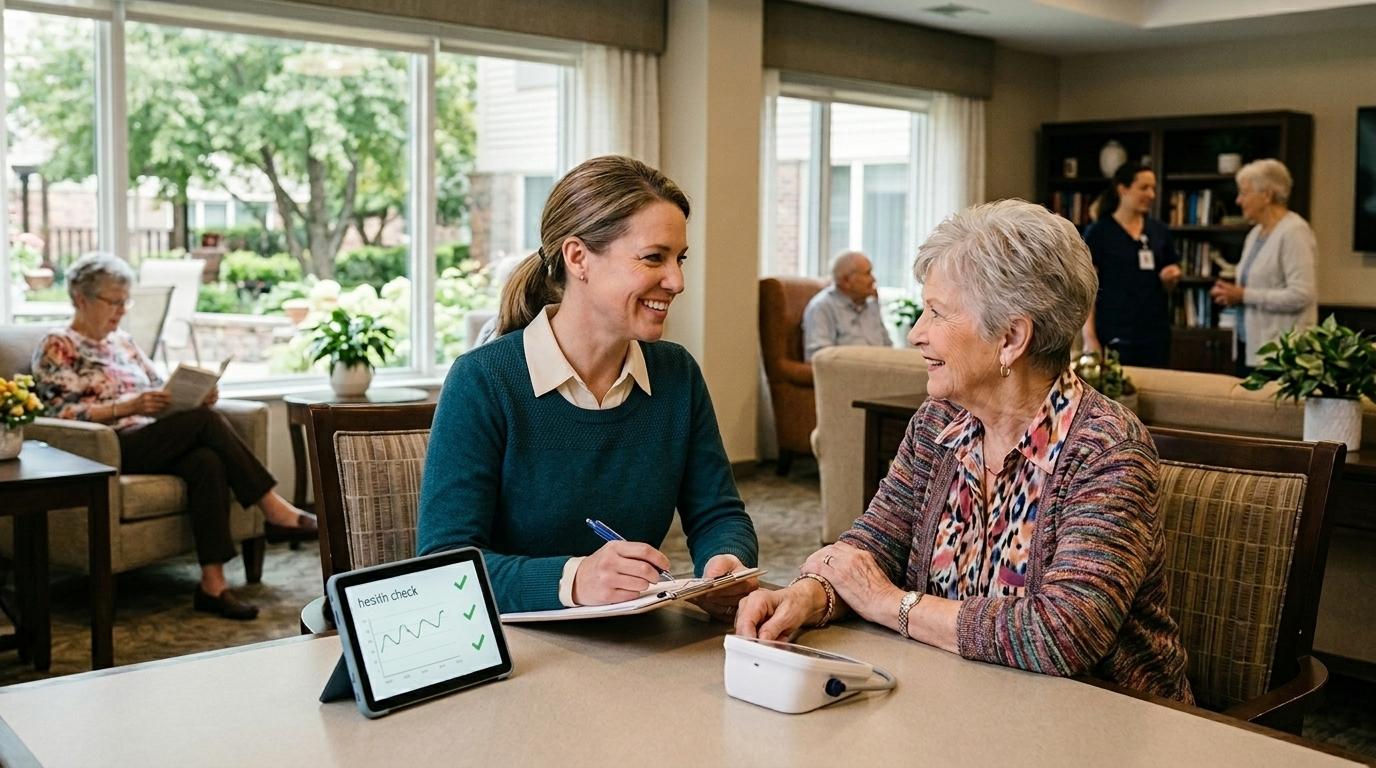
Regular health check-ins are also part of the routine. Staff watch for changes in energy levels, appetite, or mobility that might signal something worth addressing. Noticing these changes can help the care team determine whether a resident needs additional support or medical evaluation. How daily living activities are assessed can give you a clearer picture of the kind of support your loved one may need.
Personalized Care Plans
Every person has different needs, and assisted living care is designed with that in mind. When your loved one moves in, a care plan is created specifically for them, taking into account their health history, daily preferences, and personal needs. The plan can help the care team understand what support your loved one needs and how they prefer to receive it.
As your loved one’s needs change over time, the care plan may be reviewed and updated. Ask the community how often care plans are reviewed and who is involved in those decisions. You can also explore the full range of services and programs available to support your loved one at every stage.
How Medical Support Differs Across Senior Living Options
Assisted Living vs. Memory Care
While assisted living covers a wide range of care needs, memory care goes a step further for residents living with Alzheimer’s or other forms of cognitive decline. The environment is more structured, and the staff may receive additional training in cognitive and behavioral support. Services and staffing vary by community, so ask what training and support are available.
The goal in memory care is to provide a structured environment and familiar routines that may support residents living with cognitive changes. Staff learn each resident’s story, preferences, and care needs to help provide consistent, person-centered support. This type of support starts with understanding the changes that can come with dementia.
Respite Care & Short-Term Stays
If your family needs a short-term solution, respite care can provide temporary support for an older adult while their primary caregiver takes some time to rest, recharge, and care for themselves, too. Services and staffing vary by community, so ask what support is included in a respite stay.
A short-term stay is also a way to explore whether a community feels like the right fit before making a longer-term commitment. Your loved one gets to experience daily life firsthand, which can give your family more information to consider when making a decision. Respite care is worth exploring as an option for families who need temporary support.
Finding the Right Fit for Your Loved One
When you visit an assisted living community, come with questions. Ask about nurse availability, how quickly staff respond to residents, and how care plans are created and updated. Watch how staff interact with the people who already live there, because those moments can tell you if the community is a good fit for your loved one.
At The Landmark of Fridley, families can find a welcoming community where older adults can get help with daily tasks. They can still enjoy the people, activities, and routines that bring joy to their days. The team takes time to get to know each resident, learn what matters to them, and help families find support that feels right.
Contact us today to learn more about our assisted living community.